Off the Grid and Loud as Hell: Inside Greenville's DIY Experimental Music Underground
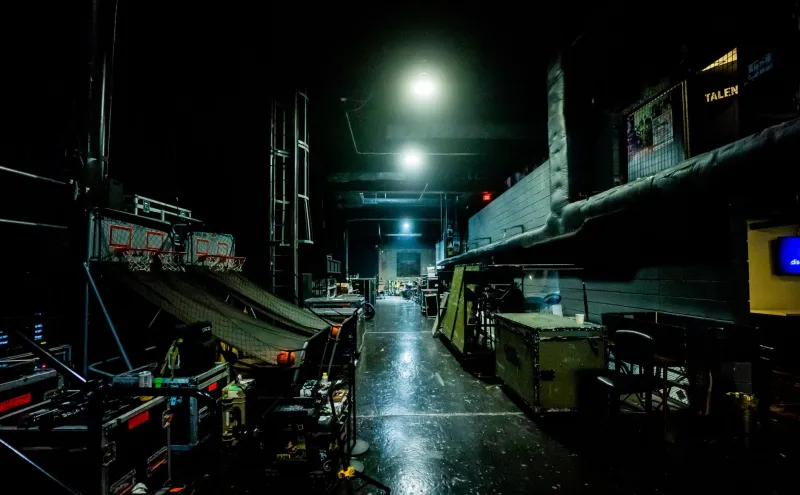
You probably won't find these places on Eventbrite. There's no Spotify pre-save link, no velvet rope, and definitely no cover band doing a serviceable rendition of "Mr. Brightside" at 11 p.m. What you will find — if someone texts you the address in time — is something far more interesting: a city quietly building one of the Southeast's most vital experimental music ecosystems, one grimy, glorious, boundary-dissolving show at a time.
Greenville, South Carolina has spent the better part of the last decade cultivating a polished public image. The revitalized downtown, the farm-to-table restaurant boom, the gleaming new hotels — it's all real, and it's all undeniably appealing. But underneath that curated surface, a different kind of creative energy has been gathering momentum. Noise artists, drone composers, free jazz improvisers, electronic experimenters, and performers who resist every category are finding each other, building community, and carving out space in a city that doesn't always know what to do with them.
The Spaces That Make It Possible
Ask anyone embedded in Greenville's experimental scene where the action is, and you'll get a different answer depending on who you ask. That's partly by design. These spaces operate with a deliberate informality — not out of secrecy, exactly, but because the moment something gets too official, too promoted, too branded, it tends to lose the very quality that made it worth showing up for.
One recurring hub is a converted warehouse space in the West End that hosts what organizers loosely call "listening events" — though that description undersells the experience considerably. On any given Friday, you might walk into a room arranged with mismatched chairs and floor cushions, a single performer coaxing feedback and texture from a modular synthesizer setup that looks like the control panel of a decommissioned spacecraft. The crowd is maybe forty people. Everyone is paying attention in a way that feels almost radical compared to the performative distraction of a typical bar show.
"There's no stage, which matters more than people realize," says one of the space's rotating organizers, who asked to be identified only by their first name, Maren. "When there's no stage, the performer and the audience are in the same room in a real way. The sound moves through everyone equally. That changes the whole dynamic of what a show can be."
Another crucial node in the network is a photography studio that doubles as a performance space on weekend nights, its white walls and open floor plan making it surprisingly versatile for everything from free improvisation sets to multimedia installations that blend sound, light, and movement. The owner, a photographer who got pulled into the experimental music orbit after shooting a few shows years ago, has developed a reputation for saying yes when other venues say no.
"I had a performer ask if he could use a contact microphone on the building's HVAC system as part of his set," he recalls, laughing. "My answer was, let's figure out how to make that work. That's kind of become the policy."
The Artists Driving the Sound
The performers populating these spaces are as varied as the venues themselves. There's a classically trained cellist who has spent the last three years building a solo practice centered on extended technique and live looping, creating dense, disorienting sound worlds that bear almost no resemblance to her conservatory training. There's a duo making music entirely from field recordings captured around Greenville — the industrial hum of the Reedy River, the ambient noise of the West End at 3 a.m., the acoustic signature of empty parking garages — processed and rearranged into something that sounds like the city dreaming.
And then there's the noise contingent, a loose collective of artists who embrace volume, distortion, and deliberate chaos as creative tools rather than problems to be solved. Their performances can be confrontational, even alienating on first encounter. They're also, to the right ears, genuinely thrilling.
"Noise music asks something of the listener," explains one practitioner, a Greenville native who performs under a name that translates roughly to "pleasant interference." "It's not background music. It doesn't want to be liked immediately. It wants you to sit with discomfort and see what happens. I think that's actually a really valuable thing to offer people, even if they don't always appreciate it in the moment."
What's striking about the scene as a whole is how collaborative it tends to be. Performers from radically different aesthetic corners — the cellist, the field recording duo, the noise artists — show up to each other's events, play on each other's bills, trade techniques and equipment and ideas. The community is small enough that everyone knows everyone, but it hasn't curdled into insularity. New people find their way in regularly, and they're generally welcomed.
Why Commercial Venues Can't Hold This
It's worth asking why this work isn't happening at Greenville's established music venues — and the answer reveals something important about the economics and social logic of experimental music.
Commercial venues need to sell drinks. They need to book acts that draw enough people to justify the overhead. They need sound systems calibrated for rock bands and singer-songwriters, not for performers who might spend forty-five minutes generating a single evolving drone. The incentive structures are simply misaligned with what experimental music requires.
"I love some of the clubs in town, and I've played them," says one artist who moves between the underground and more conventional settings. "But there's a real difference between a venue that tolerates your weirdness and a space that was built for your weirdness. In the DIY spaces, nobody's asking you to turn it down or wrap it up because the bar crowd is getting restless. You can actually go somewhere."
There's also a financial accessibility dimension that matters enormously. Shows in the underground circuit are typically pay-what-you-can or low flat admission, keeping the barrier to entry minimal. That's partly practical — these events aren't generating profit — but it also reflects a genuine philosophical commitment to making the work available to anyone who's curious, regardless of their bank account.
The Fragility and the Future
None of this is stable, and everyone involved knows it. Spaces lose their leases. Key organizers move away or burn out. The city's ongoing development pressures push affordable warehouse and studio space further from the center. The experimental music underground in Greenville exists in a state of continuous improvisation — which is, perhaps, fitting.
But the people keeping it alive seem energized rather than defeated by the precarity. New spaces emerge as old ones close. The network of artists and listeners has grown steadily over the past several years, developing enough mass that it no longer depends on any single venue or organizer to survive.
"Greenville is genuinely weird in ways that don't always get acknowledged," Maren says. "There's a real appetite here for things that challenge you, that don't fit neatly into a category. We're not just a warm-up city for Charlotte or Atlanta. We're building something of our own, and it's actually pretty special."
She's right. You just have to know where to look — or wait for the right text message.