Walls Without Permission: How Greenville's Scrappiest Venues Are Rewriting the Rules of Art
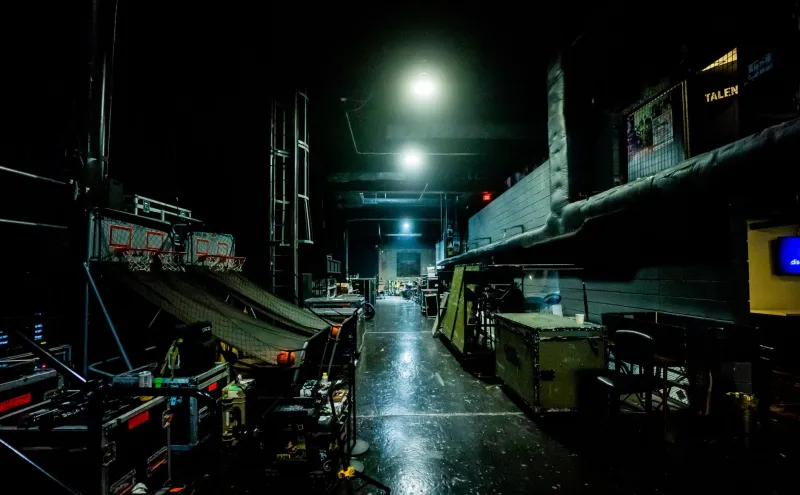
There's a loading dock on the west side of town that smells faintly of motor oil and spray paint. On a Tuesday night last month, it was packed wall-to-wall with people sipping canned wine, arguing about abstraction, and watching a performance artist slowly dismantle a sculpture made entirely of discarded signage pulled from demolished Greenville storefronts. No press release. No admission fee. No velvet rope. Just art — raw, immediate, and completely unbothered by institutional approval.
This is the Greenville gallery circuit nobody put in a tourism brochure. And honestly? It might be the most important art scene the city has right now.
The Venue Is the Statement
For decades, the conversation about where art lives has been dominated by a pretty narrow set of answers: museums, commercial galleries, university spaces. Places with track lighting and liability insurance and a board of directors. Those spaces do real work, and nobody's here to trash them. But they also carry weight — social, financial, historical — that quietly tells certain people they don't belong.
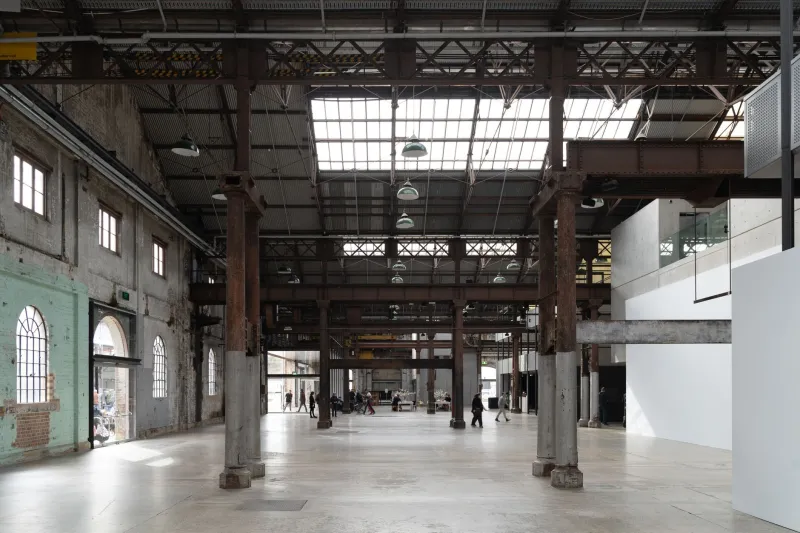
What's been quietly building in Greenville is something different. Artists and curators have started colonizing the city's overlooked edges: vacant retail units between lease cycles, industrial spaces whose owners are open to a short-term arrangement, working studios that double as exhibition spaces on weekends. The result is a circuit of venues that operates more like a living organism than an institution — adaptive, unpredictable, and deeply embedded in the neighborhoods it occupies.
"We didn't set out to make a statement about the gallery system," says one artist-curator who helped launch a rotating exhibition series out of a former auto parts distributor near the Reedy River. "We just needed a place to show work that wasn't going to ask us to sand down all the interesting edges. The space kind of chose us."
That sentiment — the space choosing the artist rather than the other way around — comes up again and again when you talk to the people running these venues. There's something about working within constraints, about the raw bones of a repurposed industrial room or a storefront with busted fluorescent lighting, that seems to actively encourage risk-taking. When the room itself is unconventional, conventional art feels out of place.
Pop-Up or Permanent? Why the Question Misses the Point
One of the criticisms leveled at alternative venues is their impermanence. If a gallery closes after six months, did it really matter? It's a fair question with an increasingly clear answer: yes, absolutely, sometimes more than spaces that stick around for decades.
Several of Greenville's most talked-about recent exhibitions have happened in locations that no longer exist as art spaces. A three-week show staged in an empty downtown storefront drew more first-time gallery visitors than many established venues see in a quarter. The show featured work by seven local artists across painting, video installation, and textile sculpture — none of it the kind of work that typically lands in commercial galleries, all of it completely sold out by closing night.
"People came in because they could see through the window," recalls one of the participating artists. "There was no door policy, no intimidating signage. Someone walking by on their lunch break just... walked in. That's the whole dream, right? That's what we're all trying to do."
The pop-up model also sidesteps some of the economic gatekeeping that makes traditional gallery representation so inaccessible. Without the overhead of a permanent space, curators can take chances on emerging artists, experimental formats, and community-driven programming that wouldn't pencil out in a conventional business model. The trade-off is instability, but for a lot of artists operating outside the mainstream, instability is already the baseline.
The Artist-Run Studio as Cultural Hub
Beyond pop-ups, a growing number of working studios in Greenville have evolved into semi-regular exhibition and event spaces — a model that collapses the distance between production and presentation in ways that feel genuinely radical.
When you see a painting hanging in the same room where it was made, surrounded by the detritus of its creation — the failed studies, the paint-crusted palettes, the reference images tacked to the wall — you experience it differently. The mythology of the finished art object starts to dissolve. What's left is something more honest: evidence of a person working through ideas in real time.
Several Greenville artists have leaned hard into this dynamic, hosting monthly open studios that function as much as salons as they do exhibitions. Conversation is the medium. The work on the walls is a starting point, not a conclusion.
"I want people to argue with me," says one painter whose studio in a shared creative complex near the West End has become a de facto gathering spot for Greenville's experimental art community. "If someone leaves feeling comfortable and validated, I probably didn't show them anything worth seeing."
Who's Actually Showing Up
The audiences these spaces attract are worth paying attention to. Talk to visitors at alternative venues and you hear a consistent thread: people who felt like the traditional gallery world wasn't built for them. Younger audiences, people of color, working-class art lovers who never felt the permission to walk through certain doors. These spaces, with their lack of ceremony and their physical accessibility, are reaching people that institutional art has historically struggled to connect with.
That's not an accident. Many of the curators and artists running these venues are actively thinking about access — not as a buzzword, but as a practical design problem. Who can physically get here? What does this space signal when you walk past it? What's the implicit social contract at the door?
The answers being built into Greenville's alternative circuit are deliberately different from what you'd find at a more established institution. And the audiences showing up are proof that the approach is working.
What Comes Next
The honest tension in all of this is sustainability. Alternative spaces burn bright and often burn out. The artists and curators driving Greenville's unconventional gallery scene are largely doing it on goodwill, borrowed time, and a collective refusal to wait for institutional permission. That's inspiring. It's also exhausting.
The question the city's creative community is starting to wrestle with is how to support these spaces without smoothing out what makes them vital. There's no clean answer. Funding introduces accountability. Permanence introduces conservatism. The scrappiness that makes these venues electric is often a direct product of their precariousness.
But here's the thing: Greenville's alternative art circuit isn't asking for your sympathy or your institutional blessing. It's already happening, in loading docks and borrowed storefronts and studios that smell like turpentine and possibility. The only question is whether you're going to show up.
The loading dock is probably booked for next month. Keep your eyes open.