From Pull Requests to Paint: The Tech Workers Quietly Transforming Greenville's Art Scene

Photo by Photo by Sou Jest on Unsplash on Unsplash
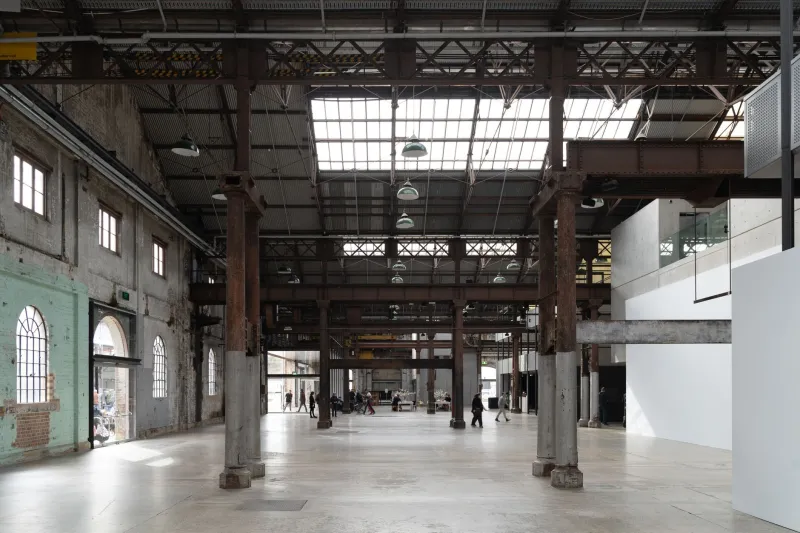
Somewhere in a repurposed warehouse off Augusta Street, a projector hums to life and throws cascading geometric shapes across a bare concrete wall. The person behind it isn't a classically trained painter or a gallery-circuit veteran. He's a 34-year-old backend developer who spent his Tuesday afternoon debugging a payment API and his Tuesday night writing code that makes colors breathe.
This is Greenville in 2025, and the line between the tech corridor and the avant-garde has never been blurrier — or more interesting.
The Accidental Artist Pipeline
Greenville's tech scene has grown fast. The city has quietly attracted a wave of software companies, remote workers, and startup founders over the past decade, drawn by the cost of living, the food scene, and — let's be honest — the vibe. What nobody fully anticipated was that importing a critical mass of creative problem-solvers would also mean importing a new generation of artists who just happen to speak fluent Python.
The crossover isn't entirely surprising when you think about it. UX designers already live at the intersection of aesthetics and function. Data visualization specialists spend their days making abstract information beautiful. Game developers are, at their core, world-builders. The leap from "making things work" to "making things mean something" is shorter than most people assume.
What's changed in Greenville is that these folks are actually making the jump — and they're doing it loudly.
Code as Medium, Not Just Tool
Generative art — work created through algorithms, often with an element of randomness or machine-driven decision-making — has existed as a concept since the 1960s. But it's having a serious cultural moment right now, and Greenville's tech community is riding that wave with genuine enthusiasm.
Local developers are building installations that respond to sound, to movement, to live data feeds. One UX designer has been building an ongoing series of pieces that pull real-time air quality data from across the Upstate and translate it into shifting color fields projected onto canvas. It's part environmental commentary, part data art, and entirely captivating in person.
Others are working in what you might call "live coding performance" — writing and modifying code in real time while the results play out visually or sonically in front of an audience. It's the kind of thing that sounds incredibly niche until you actually watch it happen, at which point it's kind of hypnotic. There's a transparency to it, a vulnerability. The mistakes are part of the show.
Challenging the Gatekeepers
Not everyone in Greenville's traditional arts community has rolled out the welcome mat. There's a real tension — sometimes spoken, sometimes just hanging in the air at gallery openings — about what qualifies as "real" art and who gets to belong in the conversation.
The avant-garde has always had gatekeepers, even when it's pretending not to. And there's a version of the critique that has some merit: tech culture carries its own brand of arrogance, a tendency to assume that if you're smart enough to build something, you're automatically smart enough to make it meaningful. Not every developer who fires up a generative art library is making work that earns a second look.
But here's the thing — that's true of every creative discipline. The answer isn't to police the borders. The answer is to raise the conversation.
And honestly, some of the most interesting dialogues happening in Greenville right now are happening precisely because people who think in systems are bumping up against people who think in symbols. The friction is generative. That's kind of the whole point.
Where It's Actually Happening
If you want to find this work, you have to know where to look — which, fittingly, is part of its underground appeal.
Small group shows are popping up in spaces that don't usually host art: coworking lounges after hours, rooftop decks, the occasional converted garage. There's a loose, informal network of tech-adjacent creatives who share work through group chats and word of mouth more than through formal exhibition channels. Events get announced a week out, sometimes less. The vibe is deliberately low-key, which makes actually stumbling into one feel like a genuine discovery.
Some of this work is also bleeding into more established venues. A few of Greenville's galleries have started actively courting digital and interactive pieces, recognizing that younger audiences respond to immersive, participatory experiences in ways that static wall-hung work sometimes doesn't reach. The Warehouse Theatre's experimental programming has made space for performance pieces with tech components. The city's First Fridays circuit has seen more projection-based work and interactive installations in the past year than in the several years before it combined.
The Identity Question
There's something worth sitting with here beyond the aesthetics: what does it mean for Greenville's creative identity that its newest artistic voices are coming from the tech sector?
For a city that has spent years cultivating a reputation as a place where creative people can actually afford to live and work, this is a meaningful data point. The artists who are emerging from the tech-to-art pipeline aren't transplants chasing a scene — they're people who built lives here, who are embedded in the community, who are making work that reflects this specific place and moment.
There's also something quietly radical about the democratization of tools that makes this possible. Generative art frameworks are open-source and free. Projection equipment is rentable. The barrier to entry for making ambitious, technically sophisticated work has never been lower, which means the question of who gets to be an artist is genuinely opening up in ways it hasn't before.
What Comes Next
The honest answer is nobody knows, and that's what makes it exciting.
Greenville is at one of those inflection points where a scene is forming in real time — before the think-pieces catch up, before the institutions figure out how to categorize it, before it hardens into a brand. The tech workers making art here right now are doing it because they can't not do it, because the tools are in their hands and the questions won't leave them alone.
That's a pretty good definition of an artist, actually.
If you haven't been paying attention to this corner of Greenville's creative world, now is an excellent time to start. The show is already running. You just have to find the warehouse.