Alone in the Studio: Why Some of Greenville's Most Talented Creators Are Done Doing It Together
For a certain stretch of time, collaboration was the whole point. You couldn't throw a paint-stained rag in Greenville's art scene without hitting a joint mural project, a multi-disciplinary pop-up, or some kind of community-driven installation that had fourteen names in the artist statement. The city's creative energy felt electric, communal, and genuinely alive. But lately, something has shifted — quietly, almost imperceptibly — and some of the most compelling work coming out of Greenville is being made by people working completely alone.
This isn't a story about artists becoming antisocial. It's more nuanced than that, and honestly, more interesting.
The Burnout Nobody's Talking About
Ask any artist who has cycled through a few collaborative projects in Greenville and you'll start hearing a familiar set of complaints, usually delivered with a nervous laugh, like they're not sure they're allowed to say it out loud. The meetings that eat up studio time. The compromises that slowly sand down the sharpest edges of an idea. The emotional labor of managing group dynamics when everyone in the room has a strong opinion and a fragile ego.
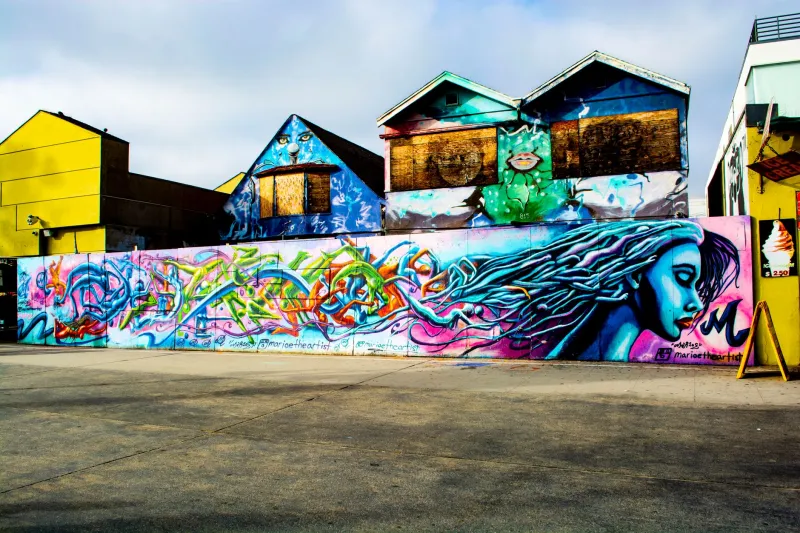
"I spent six months on a community mural project and I think I made maybe four decisions that were actually mine," says one local painter who asked to remain unnamed, not because she's embarrassed, but because she still has friends in the organizations she's quietly distanced herself from. "The final piece looked fine. People liked it. But I didn't recognize my own hand in it anywhere."
That particular flavor of creative erasure — the kind that happens slowly, through consensus and compromise — is something therapists might call burnout, but artists tend to describe it differently. They talk about losing their voice. About showing up to the studio and not knowing what they actually want to make anymore because they've spent so long making what the group decided on.
When 'Community First' Becomes a Cage
Greenville has cultivated a genuine and admirable culture of arts community-building over the past decade. Organizations, collectives, and informal networks have done real work connecting creators, opening spaces, and making the scene more accessible. Nobody serious is disputing that. But there's a growing tension between the community-first ethos that defined the scene's rise and the individual creative needs of the artists who built it.
Sculptor and installation artist Marcus Delray, who spent several years deeply embedded in Greenville's collaborative arts networks before stepping back two years ago, puts it plainly: "There's a kind of social pressure in this scene where going solo feels like a betrayal. Like you're choosing yourself over the movement. But the movement can't sustain itself if all the artists inside it are running on empty."
Delray's recent solo work — dense, obsessive assemblages built from salvaged industrial material — is some of the most formally rigorous stuff he's ever made. He says he couldn't have arrived at it inside a collective framework. "Collaboration, at its best, pushes you somewhere unexpected. But it can also keep you in the middle of the road. Solo work lets me go to the weird edges."
The Economics of Shared Credit
There's another layer here that doesn't get discussed enough: money. Or more precisely, the way credit and compensation get distributed in collaborative projects, and how that distribution often doesn't reflect the actual labor involved.
Multimedia artist and former collective member Priya Voss spent three years contributing to a rotating group exhibition series in Greenville before she did the math. "I was putting in probably sixty percent of the organizational work, forty percent of the creative output, and getting one-fifth of the visibility because there were five of us," she says. "That's not sustainable. That's not even fair."
Voss now operates as a strictly independent artist, selling directly through her own channels and taking on commissioned work on her own terms. She misses certain things about the collective energy — the late-night brainstorms, the sense of shared purpose — but she doesn't miss the invisible labor that came with it. "Solo practice isn't lonelier," she says. "It's actually clarifying."
What Gets Lost, What Gets Found
It would be dishonest to frame this as a clean win for solitude. Artists who have made the shift away from collaborative work are mostly pretty candid about what they gave up. Community projects, at their best, create accountability structures that push artists to finish things. They generate audiences that individual practitioners sometimes struggle to build on their own. And there's a kind of creative friction that comes from working alongside other people — a productive irritation — that solo practice just can't replicate.
"I miss being challenged in real time," admits one Greenville-based painter who recently stepped back from a long-running collective to focus on a personal series of large-scale abstract work. "When you're alone in the studio, your only interlocutor is yourself, and you can get very comfortable with your own blind spots."
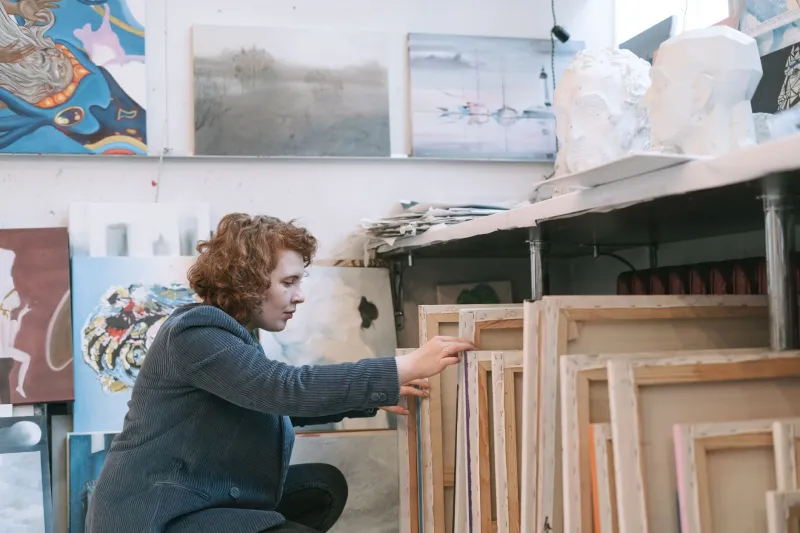
But she also describes the solo work as the most honest she's ever made. There's no committee to answer to, no aesthetic consensus to honor. Just her and the canvas and whatever she's actually trying to figure out.
What This Shift Tells Us About the Scene
The move toward solo practice among some of Greenville's most experienced artists might feel like a retreat, but it reads more like a maturation. When a creative community grows up, it starts to differentiate. The early, heady days of collective energy give way to something more complex — a scene where collaboration is a choice rather than a default, where artists can move between modes depending on what the work actually needs.
That's not a crisis. That's a healthy ecosystem doing what healthy ecosystems do.
The real question for Greenville is whether its arts infrastructure — the galleries, the nonprofits, the grant-making bodies — can adapt to support both modes equally. Right now, a lot of the funding and visibility still flows toward collaborative, community-facing projects, because those are easier to describe in a grant application and easier to photograph for a press release. Solo practice, especially experimental solo practice, tends to be harder to sell to institutions.
If the scene wants to keep its most adventurous artists engaged, it's going to need to get more comfortable with work that doesn't have a committee behind it — work that's strange and personal and maybe a little difficult, made by one person alone in a room, following something only they can see.
That, arguably, is where the most interesting art has always come from.