Priced Out of the Canvas: Greenville's Artists Are Fighting to Stay in the City They Made Cool
There's a particular kind of irony that plays out in American cities with uncomfortable regularity: artists move into affordable, overlooked neighborhoods, make them interesting, make them livable, and then watch helplessly as that very transformation prices them out. Greenville is not immune. If anything, it's become a textbook example.
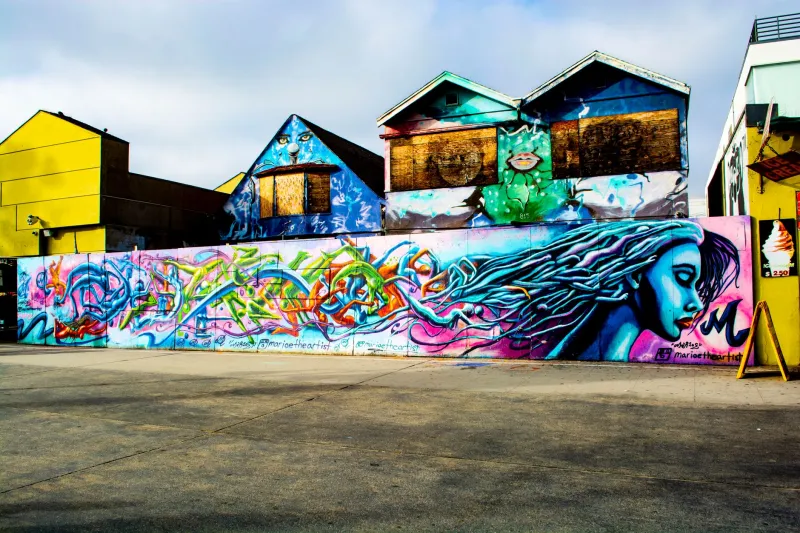
The city's creative community didn't just decorate the revival — it was the revival. The murals, the pop-up galleries, the warehouse shows, the weird little experimental spaces tucked behind barbershops — that's the texture that made people want to move here. And now, with downtown rents having climbed steeply over the past several years and development pressure bleeding into adjacent neighborhoods, a lot of the people who built that culture are quietly packing up.
The Slow Squeeze
Ask any working artist in Greenville about rent and you'll get some version of the same story. Studios that were manageable five years ago have doubled. Shared spaces that once operated on handshake agreements are suddenly fielding calls from commercial real estate brokers. The math, for many, simply doesn't work anymore.
"I've moved my studio three times in four years," says Delia Marsh, a mixed-media painter who's been based in Greenville for nearly a decade. "Each time I think I've found somewhere sustainable, the neighborhood shifts underneath me. It's exhausting. And it's not just financially exhausting — it messes with your creative rhythm in ways that are hard to explain."
Marsh isn't alone. Across the city, artists are navigating a landscape where the spaces that once served as incubators for risk-taking and experimentation are being converted, renovated, or simply priced out of reach. The galleries that survive often do so by pivoting toward more commercially viable work — which, depending on who you ask, is either a reasonable adaptation or a quiet surrender.
"There's a version of this city's art scene that looks really healthy on Instagram," says one gallery director who asked not to be named. "Nice openings, good turnout, pretty work on white walls. But a lot of the genuinely challenging stuff — the work that makes people uncomfortable, that pushes ideas — that's getting harder to find space for. Because that work doesn't sell the way something decorative does, and right now, everything has to justify its square footage."
Who Gets to Define 'Vibrant'?
The language of urban development is worth paying attention to here. Words like vibrant, creative, and arts district get deployed constantly in the marketing materials of developers and city planners. They're selling an idea of culture while often undermining the conditions that make culture possible.
Community organizer Tomas Reyes, who works with several neighborhood advocacy groups in Greenville, has watched this pattern play out up close. "The city loves to talk about its arts community in promotional materials," he says. "But when it comes to actual policy — zoning, affordable commercial space, artist live-work protections — the conversation gets a lot quieter. You can't just celebrate the aesthetic of a creative neighborhood without protecting the people who create it."
Reyes points to cities like Detroit, Pittsburgh, and Asheville as cautionary tales and, in some cases, partial models. Each has grappled with the tension between cultural vitality and real estate economics in different ways, with varying degrees of success. The through line, he argues, is whether city government treats artists as stakeholders or as scenery.
Greenville's track record on this front is, charitably, mixed.
Collective Survival
What's genuinely interesting — and maybe even hopeful — is the degree to which Greenville's creative community is not just complaining but actively building alternatives.
A handful of artist collectives have emerged over the past few years specifically in response to displacement pressure. Rather than competing for individual studio space, they're pooling resources, negotiating leases collectively, and creating shared infrastructure that no single artist could afford alone. It's a model that's less glamorous than a solo gallery show but arguably more resilient.
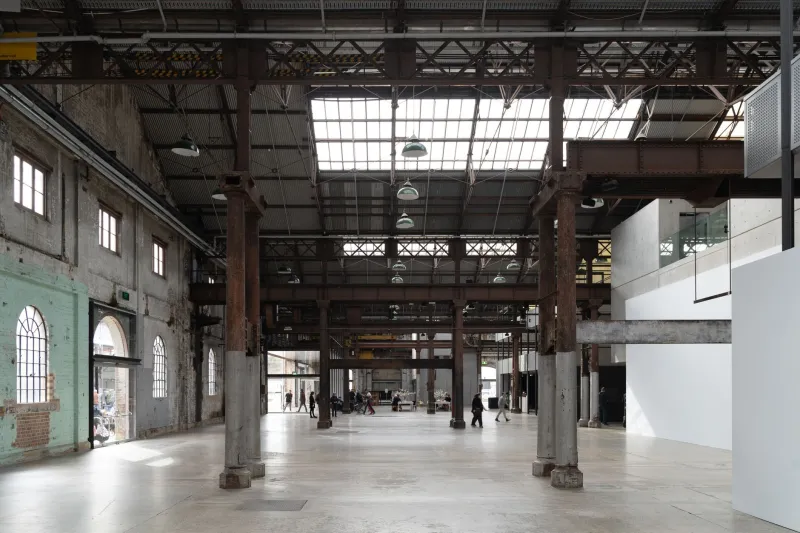
One such collective, operating out of a repurposed industrial space on the west side, has structured itself almost like a cooperative. Members pay sliding-scale dues, share equipment and storage, and rotate responsibilities for maintaining the space. It's not frictionless — collective decision-making never is — but it's kept a dozen artists in Greenville who might otherwise have left.
"We had to basically reinvent how we thought about ownership and space," says collective member and sculptor Jerome Whitfield. "The old model — you find your studio, you do your thing, you maybe show somewhere — that model assumes a certain economic reality that doesn't exist anymore. We had to get creative about the structure, not just the work."
Similar experiments are happening at the gallery level. A few smaller exhibition spaces have shifted toward hybrid models that combine gallery functions with event rentals, workshops, and community programming — diversifying revenue streams in ways that reduce dependence on art sales alone. It's a grind, but it's keeping doors open.
The Authenticity Question
None of this is without tension. There are real debates within Greenville's creative community about what gets lost when survival requires compromise.
Some artists argue that the pressure to generate revenue — through commercial commissions, tourism-friendly programming, or Instagram-optimized aesthetics — fundamentally changes the work. That the avant-garde impulse, the willingness to be genuinely strange or politically uncomfortable, gets smoothed away in the process of making art economically viable.
Others push back on what they see as a romanticization of poverty. "There's this idea that suffering produces authentic art, that if you're comfortable you've sold out," says painter and arts educator Kezia Brown. "That's a really convenient belief for a system that underpays artists. Stability doesn't kill creativity. Precarity does."
Brown is working on a proposal for a city-funded artist residency program that would provide subsidized studio space in exchange for community engagement — public workshops, school partnerships, neighborhood projects. It's an idea that's gained some traction with sympathetic council members, though it's still far from reality.
What the City Owes Its Artists
At the core of this whole conversation is a question that Greenville — like a lot of mid-sized American cities riding a development wave — keeps avoiding: what do we actually owe the people who make this place worth living in?
The creative community didn't ask for credit. It didn't move into overlooked neighborhoods as a calculated investment strategy. It moved there because that's where the space and the freedom were. And in doing so, it generated something real — a cultural identity, a sense of place, an energy that now gets used to sell condos and attract corporate relocations.
That's not a small thing. And it deserves more than a mural on a development's lobby wall.
The artists, organizers, and gallery owners we talked to aren't asking for charity. They're asking for the city to recognize that cultural infrastructure requires the same kind of intentional investment as physical infrastructure. That you can't have a creative city without protecting the conditions that make creativity possible.
Greenville still has a choice here. The displacement script isn't fully written yet. But the window for making different decisions is closing, one lease renewal at a time.