Cut Out the Middleman: Greenville Creatives Are Running Their Own Show Now
There's a particular kind of email that Greenville artists know all too well. The one that says "we loved your work but it's not quite right for our program at this time." The one that arrives six months after you sent the submission. The one that, honestly, you stopped waiting for a long time ago.
Fine. Nobody's waiting anymore.
Across Greenville's creative community, something quiet and genuinely radical has been building — a whole infrastructure of artist-run distribution that doesn't need a gallery director's blessing, a museum committee's approval, or an institution's timeline. It's scrappy, it's strategic, and it's working.
The Old Model Wasn't Built for Everyone
Let's be honest about what the traditional gallery system actually is. It's a gatekeeper structure that was designed — whether intentionally or not — to favor certain aesthetics, certain backgrounds, and certain relationships. You needed to know someone. You needed your work to fit neatly into a marketable narrative. You needed patience measured in years.
For a lot of Greenville artists, especially those working in experimental forms, mixed media, or work that challenges comfortable politics, that system was never going to work. And waiting around for it to suddenly become inclusive felt like a waste of a creative life.
So they stopped waiting.
Pop-Ups as Permanent Strategy
One of the most visible shifts in Greenville's art scene over the past few years has been the rise of the pop-up as a legitimate distribution model rather than just a promotional stunt. Artists aren't just throwing up work in a borrowed warehouse for one Saturday night — they're building recurring presences in unexpected spaces, cultivating loyal audiences who show up specifically because the experience feels different.
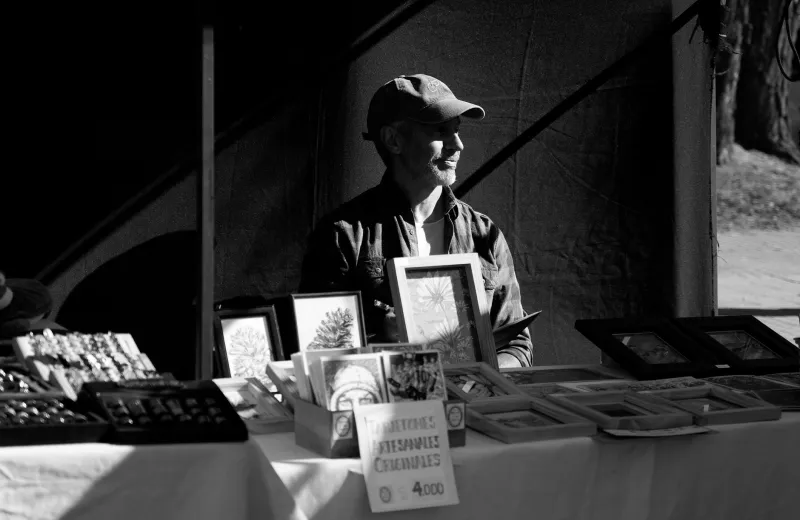
Think parking lots off Augusta Street transformed for an evening into curated outdoor galleries. Think rotating installations inside local coffee shops and bookstores that change monthly and sell directly off the wall, no commission to a third party, no markup to justify some overhead you never agreed to. The pop-up has matured from a workaround into a genuine venue model.
What makes this work isn't just the novelty. It's the relationship-building. Artists who run their own pop-ups know their buyers by name. They know who comes back, who brings friends, who actually talks to them about the work rather than just photographing it for Instagram. That kind of direct feedback loop is something a traditional gallery simply cannot replicate.
Digital Distribution, Done Differently
It would be lazy to say artists are "just using social media now." That flattens what's actually happening. Yes, Instagram and TikTok are tools — but the Greenville artists who are really thriving in the direct-to-audience space are using those platforms as entry points into deeper relationships, not as endpoints.
Newsletter culture has exploded among local creatives. Several Greenville-based artists have built Substack or Mailchimp lists with thousands of subscribers — people who opted in specifically because they want to follow the work, the process, the thinking behind it. These newsletters aren't just announcements. They're essays, studio diaries, previews of work in progress. They create intimacy at scale.
Bandcamp taught musicians that direct sales with transparent pricing could actually build more loyalty than streaming pennies ever would. Visual artists are catching up. Platforms like Gumroad and even simple Square storefronts mean that a Greenville painter can sell a print directly to someone in Portland, Oregon, keep the majority of the revenue, and build a cross-country collector relationship without a single gallery introduction.
The Collective as Distribution Engine
Maybe the most interesting development isn't any single platform or tactic — it's the way Greenville artists are organizing themselves into informal collectives that function as their own distribution networks.
These aren't formal nonprofits with boards and bylaws (though some eventually become that). They start as group chats. They're three or four artists who share a studio building deciding to do a joint release. They're printmakers pooling resources to table at markets from Greenville to Asheville to Charlotte, splitting costs and cross-promoting each other's work to audiences that previously had no overlap.
The collective model creates something that no individual artist can easily manufacture alone: critical mass. When five artists with five different audiences all promote the same event, the reach compounds. When a collective builds a shared mailing list, every member benefits from every other member's relationship-building. It's distribution as community practice.
Some of these collectives have gotten sophisticated enough to publish their own zines and catalogs — physical objects that function as both art and marketing, distributed through record stores, independent bookshops, and the kind of cool little retail spots that Greenville has been quietly accumulating for years.
Controlling the Narrative
Here's the part that doesn't get talked about enough: distribution isn't just about money. It's about story.
When a gallery represents your work, they decide how it's framed. They write the wall text. They choose which pieces go together and what the show is "about." They pitch you to press in whatever way makes their program look most interesting. You might be consulted. You might not.
When Greenville artists control their own distribution, they control their own narrative. They decide which works to release together and in what order. They write their own artist statements, in their own voice, without smoothing out the edges to make it palatable for a donor dinner crowd. They get to be complicated, contradictory, evolving — because nobody else is packaging them.
This is especially significant for artists whose identities and perspectives have historically been filtered through an institutional lens that wasn't built to hold them. Queer artists, artists of color, artists working in political or confrontational modes — direct distribution isn't just economically smarter for these creators. It's an act of self-determination.
What Gets Lost, What Gets Gained
It's worth being clear-eyed here. The traditional gallery system, for all its gatekeeping, does offer things that are genuinely hard to replicate on your own. Institutional credibility still opens certain doors. A show at a respected gallery can legitimize an artist's work in ways that a successful Instagram following doesn't, at least in some circles. Grant applications, residency programs, museum acquisitions — these pathways often still look for that traditional validation.
But the artists building their own distribution networks in Greenville aren't naive about this tradeoff. Many of them are playing both games simultaneously — maintaining relationships with institutional spaces while also building the direct infrastructure that gives them staying power regardless of what those institutions decide. It's not an either/or. It's a diversification strategy.
And increasingly, the credibility gap is closing. Collectors who built their collections through direct artist relationships are some of the most engaged and loyal buyers in the scene. Publications — including this one — are paying attention to what artists are doing outside the gallery system, not just inside it.
Greenville Is a Good Place to Try This
There's something about Greenville specifically that makes this moment feel possible. The city is big enough to have a real creative community with real density and real cross-pollination, but small enough that relationships form fast and word travels quickly. An artist who does something interesting here gets talked about. The underground has its own grapevine.
The cost of experimentation is also lower here than in New York or LA or even Atlanta. You can afford to try things, fail at some of them, and try again without burning through your entire savings in the process. That tolerance for iteration is exactly what building a new distribution model requires.
The gatekeepers aren't gone everywhere. But in Greenville, artists are increasingly deciding they don't need to wait for them to leave.