Who Decides What's Good? Greenville Artists Are Done Waiting for an Answer
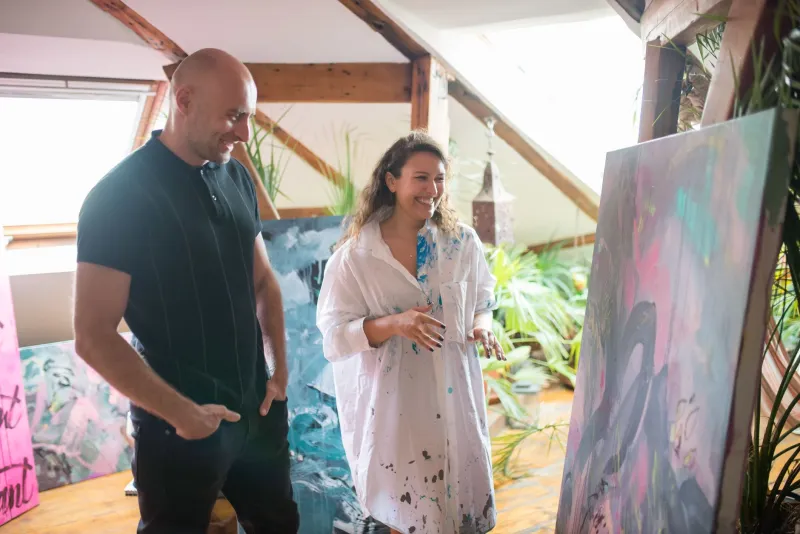
For a long time, the unspoken deal in the art world went something like this: you make the work, and then you wait. You wait for a gallerist to notice, a critic to weigh in, a grant committee to rubber-stamp your relevance. The gatekeepers held the keys, and if they didn't like your face — or your city — you were more or less invisible.
Greenville's artists have officially stopped waiting.
Across the city, a quiet but unmistakable infrastructure is taking shape — one built not by institutions, but by the artists themselves. Peer-run review platforms, grassroots criticism collectives, and independently published journals are cropping up in studio spaces, coffee shops, and shared Google Docs. The goal isn't just exposure. It's something more fundamental: the right to be taken seriously on their own terms.
The Problem With Waiting for Permission
Ask any working artist in Greenville about their relationship with traditional critical validation, and you'll get some version of the same story. The major publications don't cover the region unless something is already blowing up nationally. The grant world is slow, political, and often geographically biased toward coastal metros. And the gallery system — even a well-intentioned one — still filters work through a narrow aesthetic and commercial lens.
"There's this assumption that if you're not in New York or LA, you're still becoming something," says Dara Ellison, a mixed-media artist who's been based in Greenville for nearly a decade. "Like we're all just in a waiting room. But the work is happening now. The conversations are happening now. We just stopped expecting someone else to document them."
Ellison is one of the founding members of a loose collective called Margin Notes, which started as a monthly email thread among six artists critiquing each other's work and has since expanded into a printed quarterly that circulates throughout local studios, galleries, and independent bookstores. It's not glossy. It's not trying to be. But it's rigorous, opinionated, and deeply rooted in the specific cultural context of this place.
Criticism as a Creative Act
What makes Greenville's emerging critical infrastructure interesting isn't just that it exists — it's the form it's taking. This isn't a pale imitation of establishment art criticism. It's something stranger and more honest.
Take the work of Marcus Osei, a writer and visual artist who launched a podcast called Rough Cut last year. Each episode features two artists reviewing a third's recent show or project, with no moderator, no softening of edges, and no obligation to be kind. The format is deliberately uncomfortable.
"I was frustrated by how much of the 'criticism' I saw was just promotion with nicer words," Osei says. "Everyone's supporting everyone, which is beautiful, but it's not the same as actually engaging with the work. Real criticism is a gift. It means someone took you seriously enough to push back."
Rough Cut has found an audience well beyond Greenville — recent episodes have been shared in arts communities in Atlanta, Asheville, and Chicago — but Osei is clear about where his loyalties lie. The show exists to serve this city's creative conversation first.
Collectives as Critical Bodies
Beyond individual projects, several artist collectives in Greenville are functioning as de facto critical institutions — organizing exhibitions, publishing written responses to those exhibitions, and creating public forums where the work gets contextualized and debated.
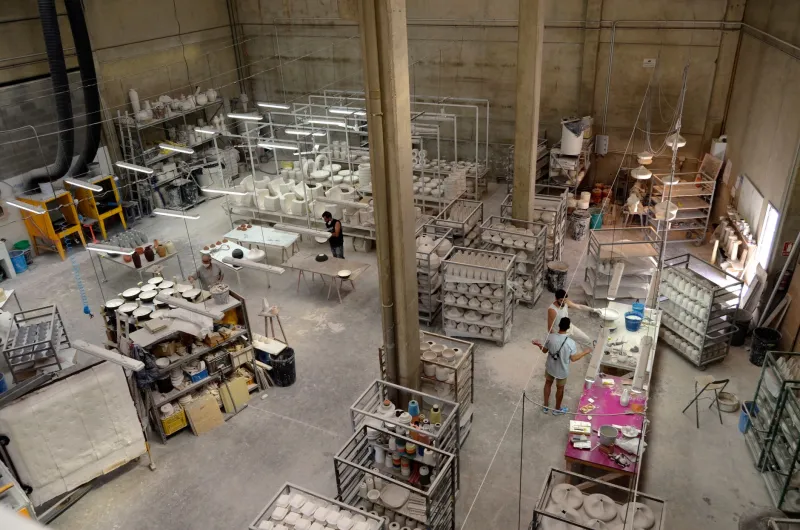
The Thornfield Collective, which operates out of a repurposed warehouse space on the west side, has been doing this more formally than most. Every show they mount comes with what they call a "response document" — a written piece, usually by a collective member who wasn't involved in the exhibited work, that tries to place it in conversation with broader cultural and political currents. Sometimes the responses are glowing. Sometimes they're pointed. Either way, they treat the work as worthy of serious intellectual engagement.
"We wanted to create the critical context we weren't getting from outside," says collective co-founder Yolanda Marsh. "Not because we think we're the authority on anything, but because someone has to do the work of saying: here's what this means, here's why it matters, here's what it's in conversation with. If we don't do it, it doesn't get done."
Marsh is quick to acknowledge the limitations of this model. Self-criticism within a community has obvious blind spots. Friendships complicate objectivity. And there's a real risk of insularity — of building a conversation so internal it stops being useful. But she argues that the alternative — silence, or the distant, uninformed gaze of an outside critic who flew in for a weekend — is worse.
The Digital Layer
Online, the infrastructure is just as active. A Greenville-based Instagram account called @frontrowgvl has been running short-form written criticism alongside artist documentation for the past two years, building a following that's equal parts local and national. Its anonymous author — who goes only by "Front Row" — writes with the kind of blunt specificity that mainstream criticism rarely allows.
There's also a growing Discord server, loosely affiliated with several local collectives, where artists share work-in-progress and receive structured feedback from peers. It's not glamorous, but it's functional, and it's creating a culture of critical engagement that carries over into how people talk about work in physical spaces.
"The online stuff and the in-person stuff are feeding each other," says Ellison. "Someone posts something in the Discord, it sparks a conversation, and then that conversation shows up in a Margin Notes piece three months later. The ecosystem is actually working."
Legitimacy Reimagined
Maybe the most radical thing about what's happening in Greenville is the implicit argument it makes about legitimacy itself. The traditional art world runs on a kind of credentialing logic — your work is validated by the institutions that validate it, and those institutions are validated by other institutions, in an endless circular loop that tends to reproduce existing hierarchies.
What Greenville's artists are building operates on a different logic entirely. Legitimacy here comes from sustained engagement, from the quality of the conversation, from whether the work actually resonates with the community it emerges from. It's messier and less legible to outsiders. But it might also be more honest.
"I stopped caring whether some editor in New York thought my work was worth covering," says Osei. "Not because I don't want a bigger audience — I do — but because I realized the validation I actually needed was already here. The people who understand what I'm making, who know the context, who can really see it — they're in this city. That's where I want the conversation to happen."
The gatekeepers, it turns out, weren't guarding anything Greenville needed. The artists just had to figure that out for themselves.