Fertile Ground: Why Greenville Keeps Producing Artists Nobody Saw Coming
There's a moment, if you spend enough time talking to artists in Greenville, when the same word keeps surfacing. Not vibrant — every mid-size city's tourism board has that one on a bumper sticker. The word you keep hearing is possible. As in: things feel possible here that don't feel possible anywhere else.
It's a hard thing to quantify. But spend a few weeks moving through the city's studios, pop-up spaces, converted warehouses, and back-porch salons, and you start to feel the texture of what people mean. Greenville has something — a particular kind of creative pressure, or maybe the absence of certain pressures — that keeps producing work nobody anticipated.
The question worth asking isn't just what is being made here. It's why here, and why now.
The Blank Slate Myth (And Why It's Partly True)
The easy narrative is that Greenville is a blank slate — no dominant art establishment, no legacy institutions calling the shots, no Chelsea-style gatekeeping infrastructure telling emerging artists what counts as serious work. And to a significant degree, that's accurate. Greenville doesn't have a MoMA satellite or an entrenched dealer network with the pull to anoint careers. What it has instead is a kind of creative vacuum that ambitious people have been rushing to fill.
"There's no one here to tell you that your idea is too weird or too early," says Marcus Delray, a multimedia sculptor who relocated from Philadelphia three years ago and now runs an informal studio collective out of a former textile warehouse near the West End. "In Philly, you're always bumping up against someone's agenda. Here, the agenda is mostly just: make the thing."
But calling Greenville a blank slate also undersells the cultural infrastructure that does exist — it's just not the kind that calcifies into gatekeeping. The city has pockets of institutional support, from university arts programs to a handful of forward-thinking gallery operators, but those institutions tend to function more as launch pads than arbiters. They provide resources without demanding aesthetic conformity, which turns out to be a rare and genuinely valuable combination.
What Cheap Real Estate Actually Buys You
Let's be honest about the economic engine underneath all of this: space. Greenville's real estate market, while tightening, still offers artists something increasingly mythological in major metros — room to experiment without the overhead killing the experiment.
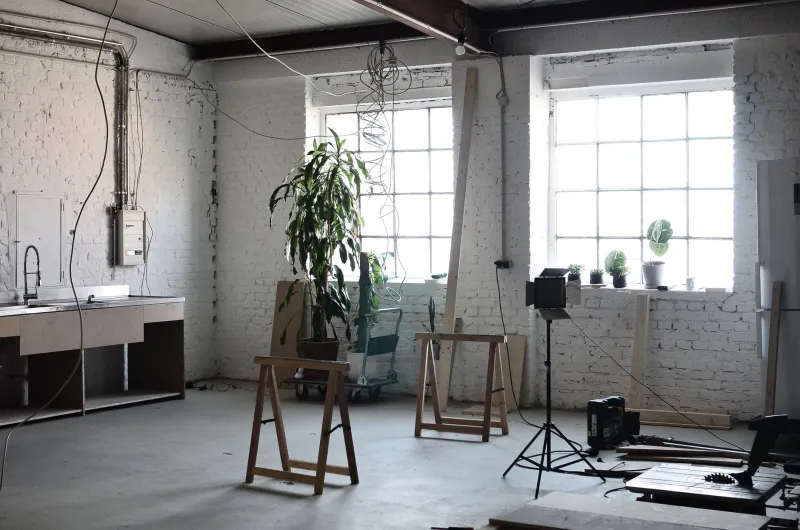
A painter who left Brooklyn for Greenville two years ago, who asked to be identified only as Simone, puts it plainly. "My studio in Bushwick was the size of a walk-in closet and cost me twelve hundred dollars a month. Here I have fifteen hundred square feet with natural light and a loading dock, and I'm paying less than I was for the closet." She pauses. "That's not a small thing. That's the difference between making small, safe work and making the work that actually scares you."
Physical scale changes creative ambition in ways that are hard to overstate. When artists have room — literal, physical room — they tend to take bigger swings. Greenville's relative affordability has functioned as an incubator not just by attracting people, but by giving them the conditions to attempt things they couldn't afford to attempt elsewhere.
The Transplant Effect
Greenville's creative ecosystem is heavily populated by people who chose to be here. That distinction matters more than it might seem.
Unlike cities where artists grow up inside an existing scene and absorb its values by osmosis, Greenville's current wave of experimental practitioners largely arrived with fully formed aesthetic sensibilities developed somewhere else — New York, Los Angeles, Chicago, Berlin — and brought those sensibilities into contact with a local context that didn't already have a dominant response prepared. The friction that generates is, by multiple accounts, genuinely productive.
"When you've worked in a place with a really established scene, you internalize a lot of rules you don't even know you're following," says cultural observer and independent curator Theresa Vong, who has been tracking Greenville's creative development for the better part of a decade. "Coming here, a lot of those artists have to rebuild their practice from scratch in some ways. And that reconstruction process tends to produce interesting work."
The transplants also cross-pollinate. A ceramicist from the Pacific Northwest ends up in a building with a sound designer from Atlanta and a textile artist who spent five years in Mexico City. The conversations that happen in shared hallways and at makeshift studio parties don't follow the genre lines that more established scenes enforce. The result is collaborative work that's genuinely hybrid — not in the buzzword sense, but in the sense that it couldn't have come from any single one of those people working in isolation.
The Institutional Gap as Creative Engine
Here's the counterintuitive part: some of what makes Greenville creatively fertile is what it lacks. The absence of a robust institutional infrastructure — the kind that provides steady grant funding, prestigious residency programs, and built-in critical attention — has pushed artists toward a DIY orientation that tends to produce more risk-taking, not less.
When there's no established pathway, people build their own. And the pathways they build tend to reflect their actual values rather than the values of whatever institution they're trying to impress.
"There's no Greenville version of getting a show at a famous gallery and suddenly being legit," says Delray. "So people stop chasing legitimacy and start chasing the work itself. Which is, honestly, how it should be everywhere, but it's rare."
Vong is slightly more cautious about romanticizing the gap. "The lack of infrastructure also means a lot of artists leave when they hit a certain ceiling," she says. "The city grows talent and then sometimes loses it. That's a real tension that doesn't get talked about enough."
It's a fair point. The same conditions that make Greenville a remarkable incubator can make it a difficult place to sustain a long career. The question of whether the city can develop enough support infrastructure to retain the artists it cultivates — without that infrastructure hardening into the kind of establishment that would kill the very culture it's trying to support — is one nobody has fully answered yet.
Something in the Air, Something in the Water
Ask enough people what makes Greenville work as a creative ecosystem and eventually the explanations run out and people just gesture at something harder to name. A social temperature. A willingness to show up for each other's weird projects. A collective agreement, implicit and unenforceable, that ambitious and strange things deserve a chance.
"I've lived in cities where the art scene is more prestigious and the work is somehow less alive," says Simone. "I don't fully understand why Greenville is the way it is. I just know it is, and I'm not leaving."
That might be the most honest summary available: Greenville's creative ecosystem is real, it's producing genuinely radical work, and it emerged from a combination of economic accident, demographic migration, institutional gaps, and something stubbornly difficult to explain. Cities don't usually become incubators for experimental art on purpose. They become them because the conditions line up in ways nobody planned, and the right people show up at the right time.
In Greenville, right now, those conditions are holding. Whether they hold long enough to define the city's creative identity for a generation — or whether affordability pressures, gentrification, and institutional calcification eventually catch up — is the story still being written.
For now, though, things feel possible here. And that's not nothing.