No Grant, No Gallery, No Problem: Greenville Artists Are Financing the Future Themselves
There's a particular kind of exhaustion that comes from writing grant applications. Any working artist in Greenville knows it — the careful language, the mission statements calibrated to sound both urgent and palatable, the months of waiting followed by a form letter that thanks you for your submission and absolutely nothing else. Painter and installation artist Deja Holloway describes it as "performing need in a way that makes someone comfortable enough to hand you a check."
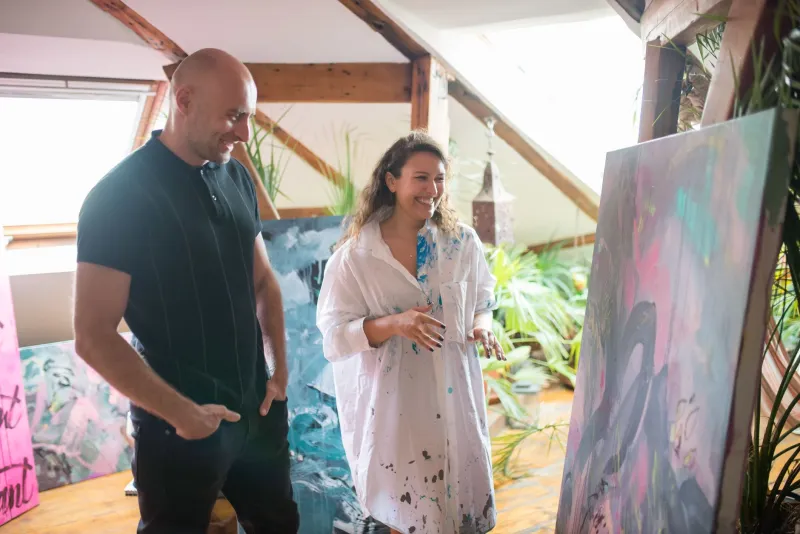
She stopped doing it two years ago. These days, Holloway funds her work through a Patreon membership that offers subscribers early studio access, process videos, and small original prints. She's not getting rich. But she's making rent, buying materials, and — crucially — making exactly the work she wants to make without tailoring it to a grant committee's vision of what's culturally significant.
Holloway is not alone. Across Greenville, a growing number of artists are quietly — and sometimes loudly — building financial infrastructure that exists entirely outside the traditional systems of galleries, foundations, and municipal arts funding. What's emerging looks less like a trend and more like a structural shift in how creative work survives in this city.
The Old System and Why It Was Already Breaking
Let's be honest about what the traditional model looked like. A painter or sculptor or experimental filmmaker would spend significant energy chasing a small number of grants from a small number of organizations, each with its own application process, its own curatorial preferences, and its own unspoken politics. Getting into the right gallery meant knowing the right people or having the right resume. Selling work meant either cultivating a collector base you probably didn't have access to or splitting your margins with a gallery taking 40 to 50 percent.
For a certain kind of artist — established, connected, making work that fit recognizable categories — this system worked fine. For everyone else, it was a slow grind that filtered out risk, weirdness, and anyone who didn't have the time or the social capital to play the game.
Greenville's arts scene has always had an undercurrent of people unwilling to wait for permission. What's changed is that the tools for building alternatives have gotten genuinely accessible.
Patreon, Subscriptions, and the Audience as Patron
The subscription model has been around long enough that it's almost boring to talk about — except that in Greenville, artists are using it in ways that go beyond the basic "support my work" pitch. Muralist and community artist Tomás Reyes runs a tiered Patreon that funds not just his own practice but a small rotating fund he uses to buy supplies for younger artists in his neighborhood. His top-tier subscribers essentially become micro-patrons for an entire micro-ecosystem.
"I reframed what the subscription was for," he explains. "It's not just about me. People are buying into a thing that's bigger than one person's art career."
This kind of community-embedded funding model is showing up in different forms all over the city. Some artists are running seasonal crowdfunding campaigns tied to specific projects. Others are building email lists and selling directly to collectors who want to skip the gallery markup entirely. The common thread is a direct relationship between artist and audience that cuts out the institutional middleman.
Crypto, NFTs, and the Greenville Collective You Haven't Heard Of
Okay, yes — NFTs had a moment, and then that moment got complicated. But a small collective of Greenville digital artists and musicians has been quietly building something more durable than the 2021 hype cycle suggested was possible. The group, which operates loosely under the name Upstate Chain, has been experimenting with blockchain-based funding mechanisms that allow members to collectively pool resources, vote on project support, and distribute proceeds from collaborative work.
It sounds technical because it is. But the underlying idea is straightforward: a decentralized treasury controlled by the artists themselves, rather than by a board of directors or a foundation's investment committee. Several members have used the collective's resources to fund work that would have been essentially unfundable through traditional channels — interactive digital installations, algorithmically generated sound pieces, augmented reality public art.
Is it perfect? Nobody in the collective would claim that. Crypto markets are volatile, the learning curve is steep, and participation still skews toward people with a certain level of tech fluency. The gatekeeping hasn't disappeared; it's just wearing different clothes. But the members argue that a gate you can learn to open yourself is fundamentally different from one controlled by someone else.
The Barter Economy Nobody's Officially Tracking
Perhaps the most interesting and least-discussed alternative economy operating in Greenville's creative community is the one that doesn't involve money at all. A loose network of artists, musicians, photographers, and makers has been trading skills and services in ways that would be invisible to any economic analysis but are deeply functional on the ground.
A ceramicist trades a set of custom pieces for six months of web design work. A band records in a studio in exchange for a mural on the studio's exterior wall. A photographer shoots a fashion designer's lookbook in exchange for a custom wardrobe piece. None of this is new — artists have bartered forever — but in Greenville right now, it feels more intentional, more networked, more like an actual system than a series of informal favors.
"We're building credit with each other," says textile artist and organizer Nia Carmichael, who has been facilitating skill-swap connections through a private group chat that now includes over 80 Greenville creatives. "It's not charity. It's a different kind of currency."
So Is It Actually More Democratic?
This is the uncomfortable question that any honest accounting of these systems has to wrestle with. The Patreon model rewards artists who are already good at marketing themselves and building an audience — which takes time, social skills, and often some existing platform. Crypto collectives require technical knowledge that not everyone has. Barter networks depend on having something to trade that someone else wants.
In other words: different filters, but still filters. The artists who are thriving in these new ecosystems tend to be resourceful, digitally fluent, and socially connected — which describes a certain kind of artist but not all of them.
What does seem genuinely different is the nature of the accountability. When your funding comes from 200 Patreon subscribers who signed up because they love your work, you answer to them in a very direct way. When a grant committee funds you, you answer to their priorities. Both are constraints — but one of them feels a lot more like freedom.
Holloway, the painter who quit the grant circuit, puts it plainly: "I'm still accountable to people. I'm just accountable to people who actually want to see what I'm making next."
That might not be a revolution. But in Greenville right now, it's starting to look like something close to one.