Polished to a Fault: Can Greenville Stay Weird When Everyone Wants a Piece of It?
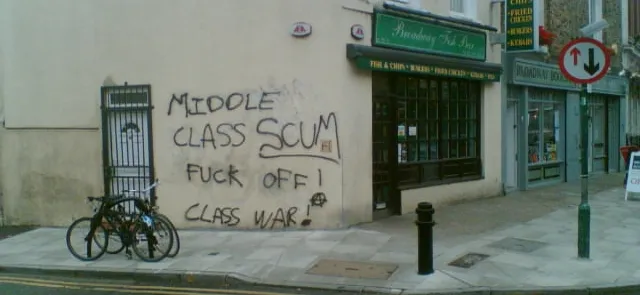
Photo: Joe Saunders from UK, CC BY-SA 2.0, via Wikimedia Commons
There's a particular kind of pride that comes with being from a place people are just discovering. Greenville had that in spades for a long time — the quiet confidence of a city that knew what it was before the rest of the country caught on. Artists moved here cheap, made strange and beautiful things, and built a scene that felt genuinely theirs. Then the rest of the country caught on.
Now the city is something else. The boutique hotels are full. The restaurant wait times are real. The marketing materials are slick. And in studios, back rooms, and late-night conversations across the West End and beyond, a growing number of the people who actually built this place are asking the same uncomfortable question: did we win, or did we lose?
The Mythology of the Scrappy City
Greenville's creative identity didn't emerge from a civic master plan. It grew in the gaps — in underutilized warehouses, in cheap storefronts nobody else wanted, in the strange alchemy that happens when talented, broke people end up in the same zip code with nothing to lose. The art that came out of that moment was restless, unpolished, and genuinely surprising. It had teeth.
That origin story matters because it's the thing the city keeps selling. Visit Greenville's promotional materials still lean heavily on words like "vibrant" and "authentic" and "creative," language that points back to a scene built by people who are increasingly priced out of the very neighborhoods those brochures are advertising. The mythology has outlasted the conditions that created it.
Ask anyone who was here ten years ago and they'll tell you: it's not that Greenville got bad. It's that it got curated. And curation, for all its usefulness, is the enemy of the genuinely unexpected.
What Gentrification Actually Looks Like Here
It doesn't always arrive with a wrecking ball. Sometimes it shows up as a wine bar where a print shop used to be. Sometimes it's a gallery that moved into a space a scrappier gallery vacated because the lease tripled. Sometimes it's a new apartment complex with a mural on the side — commissioned, approved, sanitized — where an unauthorized one used to make you stop walking and actually look.
Local artists have watched this process with a mixture of pride and grief that's hard to articulate without sounding ungrateful. Nobody wanted Greenville to stay struggling. But there's a difference between a city growing and a city being consumed, and several people we spoke with feel like Greenville is somewhere in that uncertain middle space right now.
"I used to be able to take a risk here because failure was affordable," says one painter who's been working in the city for over a decade and asked not to be named. "Now failure means moving. And when failure means moving, you stop taking risks. That's not an art scene anymore. That's a resume."
The Institutions Aren't the Problem — and They're Not the Solution
Greenville has real cultural infrastructure now. Museums, festivals, residencies, public art programs — things that took years to build and genuinely matter. None of that is the villain in this story. The tension is subtler than that.
Institutions, by their nature, are stabilizing forces. They preserve, they legitimize, they create pathways. But the avant-garde doesn't live in preservation. It lives in instability, in the willingness to make something that might not work, in spaces that exist because nobody's paying attention yet. The more thoroughly Greenville's creative life gets institutionalized, the harder it becomes to do the kind of work that doesn't fit neatly into a grant application or a festival program.
Some artists are navigating this by working around the infrastructure rather than through it. Pop-up shows in unconventional spaces, deliberately low-profile events, work that circulates through word of mouth and never gets a press release. It's a quiet resistance, and it's happening more than the official cultural calendar suggests.
The People Who Stayed and the People Who Left
There are two conversations happening simultaneously in Greenville's creative community, and they don't always acknowledge each other. One is about growth — the new opportunities, the expanding audiences, the sense that the city is finally being taken seriously. The other is about loss — the friends who moved to Asheville or Detroit or somewhere cheaper and less finished, the spaces that closed, the particular energy that used to make this place feel electric and now feels, on some nights, a little too comfortable.
Both conversations are legitimate. The artists who stayed and built careers here deserve their success. The ones who left weren't wrong to go. What's worth examining is the structural pressure that forced the choice in the first place — and whether a city that claims to value creativity is doing anything meaningful to ensure that the next generation of weird, broke, ambitious makers can actually afford to show up.
Spoiler: the evidence is mixed.
Reinvention Requires Something to Lose
Greenville's whole brand is built on the idea of transformation — a city that remade itself, that shed an industrial past and became something unexpected. It's a genuinely compelling story. But reinvention, the real kind, requires a willingness to be uncomfortable. It requires tolerating things that don't look finished yet.
Right now, large parts of Greenville look very finished. The streetscapes are clean. The programming is polished. The edges have been rounded. That's not nothing — livability matters, and plenty of cities would trade problems with Greenville in a heartbeat. But a city that wants to sustain a genuine avant-garde culture can't just celebrate the artists who made it interesting and then price out everyone who might do the same thing next.
The paradox is real and it's not going away. Greenville became desirable because of its creative energy. Its desirability is now threatening that energy. The city has navigated bigger contradictions before — it's kind of the whole story. Whether it can do it again, without losing the plot entirely, is the question nobody in the official narrative is quite willing to sit with yet.
Some of us, though, are sitting with it. Loudly.